



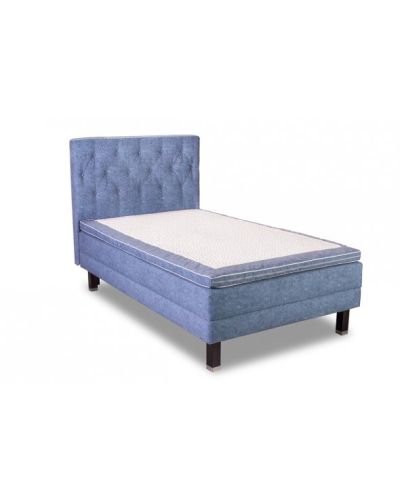










If you’re looking to buy a new mattress, figuring out where to start may be the hardest part. Should you visit a shop or buy online? Would you prefer a more affordable option or are you willing to spend a little more? And what about size, shape, materials and appearance? There’s a lot to consider, especially if you’re buying a mattress for the first time.
This practical guide shows you exactly how to choose the right mattress for you. We’ll cover different types of mattresses, how to find the sleeping surface that best suits the way you sleep, and much more. By the end, we guarantee you’ll know exactly how to find your dream mattress. If you still have questions, feel free to contact our customer service team!
Key questions about your mattress
Here are the five most important questions to consider when buying a new mattress.
1. How old is your current mattress?
2. What position do you sleep in?
3. How much do you weigh?
4. What type of mattress do you need?
5. What’s your budget?
Everyone searches a little differently, but working through these questions will help you choose the right new mattress. Let’s start with the age of your mattress!
1. How old is your mattress?
This is the first question to answer. Why? The age of your mattress can play a big part in deciding whether you need a new one. As a rule of thumb, consider replacing it if you’ve had it for more than 8 years. That’s a rough guide that usually helps you judge whether your mattress is still doing its job of helping you sleep well.
See the chart below for a quick look at how long different mattress materials typically last:

These figures give you a sense of how long your mattress can last, but the best way to tell whether it’s time to replace it is to listen to your body. Do you wake up with stiff joints? Do you struggle to find a comfortable position at night? Have you noticed dips in the mattress that persist even when you turn it regularly? If you answered yes to any of these questions, it may be time to give your bed a new lease of life with a new mattress.

2. What’s your sleeping position?
Now that you’ve considered the age of your mattress, it’s time to think about how you sleep. We’ll look at several factors specific to you and the way you fall asleep. Start by finding out which position you sleep in.
Most people change positions during the night and tend to favour certain positions. You might start out on your back and then roll onto your side. Or you might spend most of the night on your side and end up on your stomach. If you’ve never thought about which positions you prefer, I’d suggest paying close attention to how you sleep over the next week. You’ll probably find that you mainly sleep on your back, side or stomach.
This matters because different mattresses suit different sleeping positions. Below, we’ll look at which types of mattresses work best for each position.
Back sleepers
Back sleepers can experience unnecessary tension in their shoulders and lower back. A mattress that is too soft can cause the back to curve and ache. These sleepers therefore need a medium-firm feel, somewhere between a soft and a firm mattress.
In our experience, people who sleep on their backs tend to prefer a mattress between 5.5 and 7 on a scale of 10, where one is the softest mattress in the world and 10 is the firmest. A score of 6.5 is usually considered the standard for medium firmness.
Why is this level of firmness right for back sleepers? It helps lift the spine into a neutral position. This is a simple way to keep the shoulders and hips aligned. It helps ease back tension and prevent pain associated with fibromyalgia and arthritis.
Side sleepers
Back sleepers need a balanced feel, while side sleepers need substantial pressure relief at the shoulders and hips. They generally prefer a softer mattress that follows the curves of the body to help prevent discomfort at night.
Softness is fairly subjective, but we use the term for mattresses that rate 4–6 out of 10 on the firmness scale.
Side sleepers put a lot of pressure on their joints at night, so a softer mattress is especially important. Many mattresses are advertised as easing shoulder and hip pain. Check the construction details to see how well a mattress relieves pressure in those areas.
For side sleepers, we recommend memory foam mattresses, which are known for closely contouring to the body, letting you sink in and relieving pressure.
Stomach sleepers
Stomach sleepers generally need a much firmer mattress than side sleepers to keep their hips level with their shoulders. Their biggest problem with a soft mattress is that it lets the hips sink out of alignment with the rest of the spine.
If you sleep on your stomach, look for a mattress that rates 7–9 out of 10 on the firmness scale. Again, compared with the industry standard of 6.5 for medium firmness, these ratings show that stomach sleepers need the firmest mattresses.
A rock-hard mattress is unnecessary. Look for a mattress that combines a very firm support core with thin comfort layers. Innerspring or hybrid mattresses are therefore usually the best fit for stomach sleepers.
Combination sleepers
Finally, combination sleepers get comfortable by switching among all three positions. This is a common way to sleep and calls for an adaptable mattress that feels comfortable on the back, side and stomach.
We generally recommend a medium-firm mattress for combination sleepers, with a firmness close to the industry standard of 6.5.
A medium-firm mattress is an excellent choice because it usually offers a comfortable balance of pressure relief and support. It is soft enough to relieve pressure on your shoulders when you sleep on your side and firm enough to support your hips when you lie on your back.

3. How much do you weigh?
When choosing a mattress, consider your weight and body type as well as your sleeping position. Each mattress model is designed to support people in specific weight ranges. Firmness, thickness and the way the materials are put together all play a role.
If you weigh less than 60 kg,
you’ll probably feel most comfortable on a soft to medium-soft mattress (2–4). These mattresses are best suited to your body for relieving pressure on the shoulders, lower back and hips. A firmer mattress may follow your body’s contours less closely, causing extra pressure and discomfort.
If you weigh 60–100 kg,
a medium-firm mattress (4–6) is likely a good fit. It should be firm enough to support your shoulders, lower back and hips while still feeling soft enough to sleep comfortably and moulding to your body.
If you weigh more than 100 kg,
consider a medium-firm to firm mattress (6–8). Softer mattresses sink further under your weight and may sag uncomfortably, especially between your shoulders and hips. A firmer, more supportive mattress keeps your body level. You may also need a thicker mattress with extra support layers. Thinner mattresses often sink too much for people who weigh more than 100 kg.

4. What type of mattress do you need?
Now that we’ve covered some of the main things to consider when buying a new mattress, it’s time to work out exactly what type you need. Below, we’ll look at the most popular options.
Memory foam
Memory foam mattresses are made primarily of a material known for its slow response to pressure. This helps relieve pressure considerably in sensitive areas such as the shoulders, hips and lower back.
One minor drawback of this dense material is that it tends to absorb and retain body heat. This can be a problem if you already tend to sweat at night. Today, most brands address this by infusing their memory foam with cooling additives such as copper, gel or graphite.
Latex
Latex foam responds to pressure faster than memory foam, giving it a springy, responsive feel. It’s also an entirely natural material, so it may suit environmentally conscious shoppers looking for an organic mattress. It also has a naturally cooling feel, which can be welcome if you sweat at night.
Innerspring mattresses
Innerspring mattresses are among the most popular and widely used types because they’re springy, supportive and firm. Mattresses with tall steel springs are best suited to people who like that traditional, old-school bounce.
Hybrid
One of the newer types is the hybrid mattress, which combines upper layers of foam with coils or springs. Hybrids tend to feel more balanced than traditional innerspring mattresses.

5. What’s your mattress budget?
After considering all these points, there’s one last question to answer. How much do you want to spend on a mattress? The answer will be different for every shopper, but it’s worth thinking about before you start looking. Fortunately, there are very comfortable options at every price point, so finding a mattress you love within your budget should be fairly easy. There are a few things to keep in mind.
You get what you pay for:
We’d love to say you can get an excellent mattress for under €200, but we both know that’s unrealistic. Set your expectations to match your budget. Keep in mind that plenty of affordable mattresses are just as comfortable as more expensive models.
Brand:
Don’t let advertising mislead you. Seeing a certain type of mattress advertised everywhere doesn’t mean it’s comfortable. Look past the flashy campaigns, do your research and focus on what you need to fall asleep comfortably.
Warranty:
There are plenty of ways to get more value from your mattress purchase. One of the simplest is to choose a brand with a solid warranty. Many mattresses come with a lifetime warranty that guarantees a replacement if your mattress is ever damaged. Read the fine print to find out how long your mattress might actually last.

In summary
If we could give you one piece of advice when looking for your dream mattress, it would be to focus on what matters to you. Choosing a mattress is personal, so think about what matters most to you and how you sleep. Do that and we’re sure you’ll find a mattress that suits you perfectly. Feel free to ask our expert advisers for advice!